
The Port of San Diego Champions Nature-First Coastal Protection
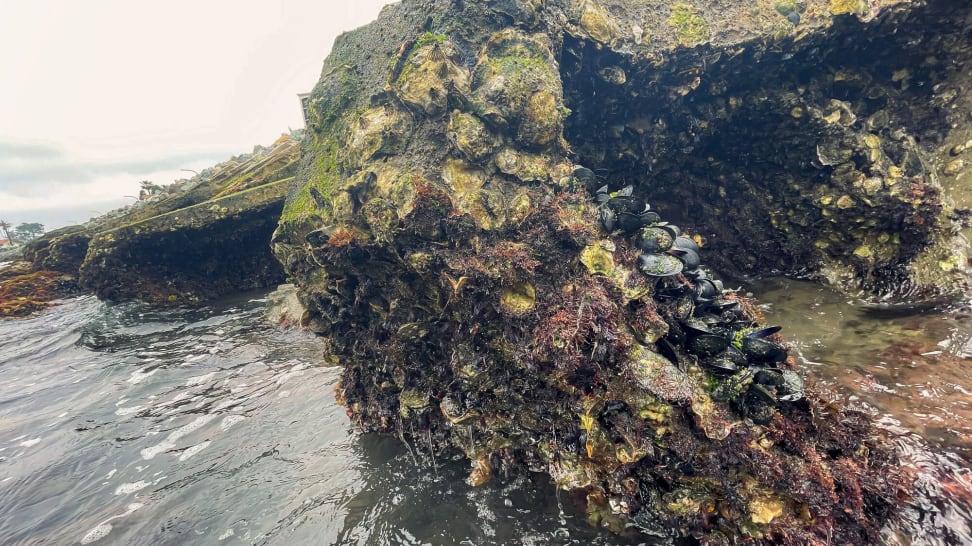
For centuries, ports have served as gateways to global commerce, economic development, and population growth, often with competing priorities that don’t always balance the impact they may have on their surrounding natural environment. The tides are turning. In fact, the Port of San Diego is leaning into nature to build a more symbiotic relationship between sea and land through the exploration of nature-based solutions.
Armored shorelines or barriers that protect coastlines from flooding and erosion—including seawalls, riprap and jetties—are traditional engineering solutions that reduce exposure to coastal hazards. But those structures can disrupt natural habitats and displace coastal species. A new wave of nature-informed coastal infrastructure is hoping to change that, and is gaining traction thanks to the Port of San Diego’s in-house Blue Economy Incubator.
Over the past several years, the Port of San Diego and one of its incubator participants, ECOncrete, have partnered to retrofit a portion of San Diego Bay’s Harbor Island with ECOncrete’s coastal armor. Known as Coastalock, this interlocking riprap takes its design cues from nature, resulting in an artificial tide pool system that protects coastlines against erosion and enhances marine biodiversity.
According to Tim Barrett, an environmental programs manager with the Port of San Diego’s Environmental Conservation Department, over 60 species have been found living in, or benefitting from, these tide pools since the first year of installation, including sea hares, sea stars, sea anemones, lobsters, fish and shellfish, and foraging birds including great blue heron.
“The project also generated measurable growth in calcium carbonate—eight times more than what was seen on the control materials,” Barrett commented via email. “This supports vast biodiversity and helps sequester carbon.”
The core of ECOncrete’s innovative approach is a proprietary admix—the technical term for a substance added to a concrete mix during the mixing process to enhance its properties. The startup has patented a bioenhancing admix that it describes as, “adapting locally-sourced concrete for marine organisms to settle while lowering the concrete’s CO2 footprint.”
This pilot project was first-of-its-kind, and the path from concept to construction took two years. The design needed approval from local, state, and federal agencies, and required the Port and ECOncrete to convene a team of marine biologists, environmental analysts, and engineers.
“Although there was initial hesitation within the engineering discipline, the completed project has been so well received that we now get requests from engineers to consider this solution elsewhere,” Barrett explained.
For their climate solution leadership, the Port of San Diego and ECOncrete were awarded The Climate Registry’s Innovative Partnership Award in 2024. The Port of San Diego Board of Port Commissioners also recently approved the expansion of ECOncrete’s system into two more locations in San Diego Bay.
The Port of San Diego established its Blue Economy Incubator in 2016 to foster sustainable aquaculture and emerging blue technologies. To-date, this unique port-led incubator has helped launch 13 pilot projects. In addition to ECOncrete, these pilots include Sunken Seaweed, which produces about 600 pounds of edible seaweed a week, and MarineLabs Data Systems, which provides real-time wave, wind, and vessel wake data that helps the Port understand how the ocean impacts coastlines.
“Some of these pilot projects and technologies are helping the Port meet our environmental needs, such as improving air and water quality, fisheries enhancement, ecosystem restoration, climate, and coastal resilience,” Barrett explained.
Similar to AltaSea at the Port of Los Angeles, the Port of San Diego’s Blue Economy Incubator is at the forefront of scaling the blue economy in Southern California. AltaSea recently formalized a partnership with the Port of San Diego through a Memorandum of Understanding and is looking forward to collaborating with the Port of San Diego to accelerate ocean-based solutions that mitigate climate change, protect coastal communities, and restore ocean wildlife.
Written jointly by AltaSea and the Port of San Diego