
In the decade following California losing most of its kelp forests, restoration has been a story of innovation and perseverance
California’s kelp forests are some of the world’s most abundant ecosystems, providing food and habitat to over 700 species, serving as the foundation for the state’s commercial fisheries, protecting coastlines from erosion, and sequestering carbon from the atmosphere. But ten years ago, this vital ecosystem was pushed to the point of near collapse by a devastating combination of marine heatwave and sea star disease that led to a 95% loss of Northern California’s bull kelp forests.
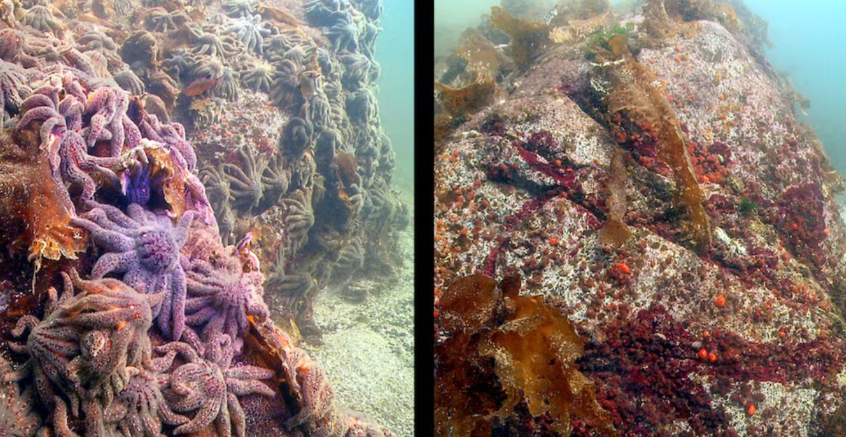
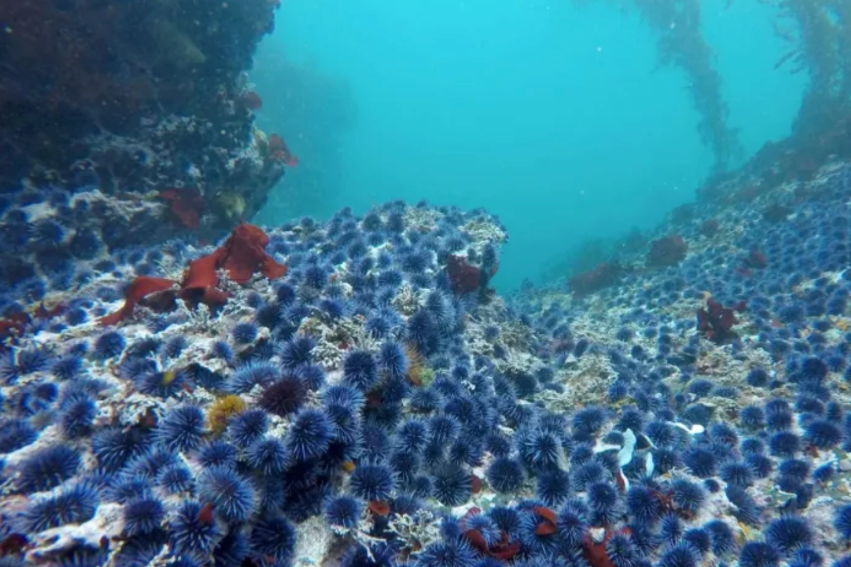
The two-year-long marine heatwave hindered kelp growth, while simultaneously a mysterious new sea star wasting disease dramatically reduced the sunflower sea star population, with some areas completely losing their sea star population over the span of weeks. With their main predator missing, an explosion of sea urchins ate their way through California’s kelp until many of the kelp forests disappeared completely and only a carpet of sea urchins remained.
In the years that have followed, California’s scientists and conservationist have risen to meet this ecological crisis, creating a network of kelp conservation and restoration efforts throughout the state. A $4.9 million grant from NOAA in 2024 funded the restoration of 47 acres of bull kelp forest in Northern California, and a separate $18 million grant from NOAA to the Nature Conservancy in 2025 launched the Pacific Coast Ocean Restoration Initiative, which will bring partner organizations together to carryout a large-scale restoration of rocky reef and kelp forest habitats throughout the state.
In the Santa Monica Bay, the Bay Foundation has spent the past decade restoring over 80 acres of kelp forest that had been depleted by sea urchins. And on the AltaSea campus in the Port of Los Angeles, Kelp Ark is creating a biobank of kelp species and identifying and crossbreeding strains that can survive in warmer waters.
Kelp Ark researchers have also gone into crisis response mode when new threats to California’s kelp emerge; after the 2025 Los Angeles wildfires, the researchers quickly collected live kelp from kelp forests that were likely to be damaged by toxic runoff from the fires, ultimately adding 17 specimens from fire-impacte coastlines to their biobank on the AltaSea campus that now includes more than 80 kelp plants and upward of 2,600 genetically distinct strains representing 12 kelp species. The goal is to preserve the genetic diversity of Southern California’s kelp and have healthy specimens ready for ecosystem restoration.
The shift towards triage and restoration in California kelp science is part of a burgeoning global effort to save kelp from ocean warming and other stressors. Some highlights include a selective-breeding programs at Woods Hole Oceanographic Institution that is producing heat-tolerant kelp, the Nature Conservancy led efforts to remove urchins and replant kelp off the coast of Australia, and the world’s largest kelp restoration project in South Korea—which has resulted in 71,660 acres of kelp forest.
Global kelp forest coverage has declined by at least 50 percent over the past several decades, and as climate change-fueled marine heatwaves become an annual problem, the struggle to preserve and restore these life-sustaining ecosystems is far from over. But scientists and conservationists are working hard to ensure that the battle is far from lost.
Written by Emily Vidovich. Emily is an environmental journalist specializing in ocean conservation and climate change mitigation. She obtained her bachelor’s degree at George Washington University and a Masters in Global Environmental Studies at a university in Tokyo, Japan. Born and raised in the Port of Los Angeles, she now works in research and communications at AltaSea.