
A Blue Foods Future
Sustainable blue foods sourced from Earth’s waters have the potential to address both food scarcity and ocean degradation—two of the world’s most pressing problems.
The world’s food systems are at an impasse. The status quo of food production hurts our planet—the oceans are overfished and animal agriculture is just as responsible for climate change as fossil fuels. And the combination of climate change and population growth likely means global food insecurity will be unavoidable in the coming decades. But sustainably harvested blue foods offer an alternative.
Blue foods deserve a seat at the table in every conversation about the future of food,” says Jennifer Bushman, executive director of the sustainable blue foods advocacy firm Fed by Blue, “Blue foods are a central part of a resilient, climate-smart food system.
Blue foods are already a primary source of nutrition for three billion people. And, if harvested sustainably, blue foods can help heal the planet while also circumventing the pitfalls land-based agriculture faces in a world altered by climate change. That’s because blue foods require no soil or fresh water, and some forms of sustainable aquaculture—especially shellfish and kelp—are even able to clean the ocean, create habitats, and absorb carbon as they grow.
Achieving a sustainable blue foods future—a future where the world is fed and the oceans thrive—will require the seafood industry to substitute outdated, environmentally damaging fishing and aquaculture practices. Bushman explains, “Responsibly produced blue food means improved wild fisheries management and fishing practices. It [also] means innovation, cleaner practices, and using less resources.”
Advocating for sustainably-sourced seafood is the focus of Andrew Zimmern, celebrity chef and special advisor to the AltaSea Deep Blue Decade, in his Emmy nominated docuseries Hope in the Water. Bushman, who served as the series’ executive producer of impact, met a wide variety of blue foods farmers over the course of filming the show—including Paul Damhoff and Barbara Frank, who turned a third-generation dairy barn into a sustainable shrimp farm, and Dune Lankard, a member of the Eyak tribe in Alaska who is turning ocean conservation and kelp cultivation into economic opportunity for indigenous Alaskans.
“[Lankard] is blending traditional knowledge with modern regenerative aquaculture in a way that heals both ecosystems and communities,” Bushman says. “Watching him bring people back to the water, helping them build local food sovereignty and economic independence through kelp farming, was profoundly moving.”
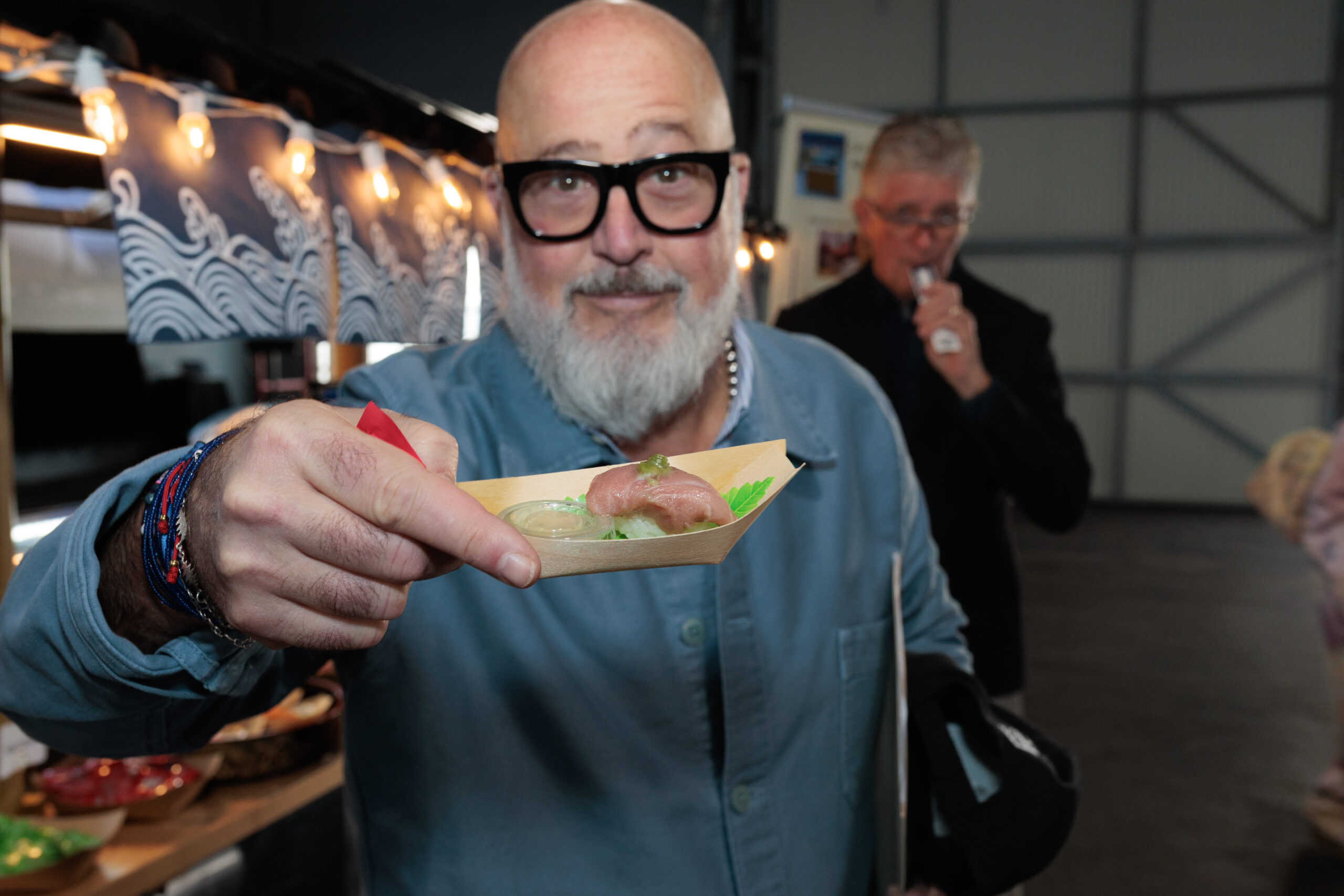
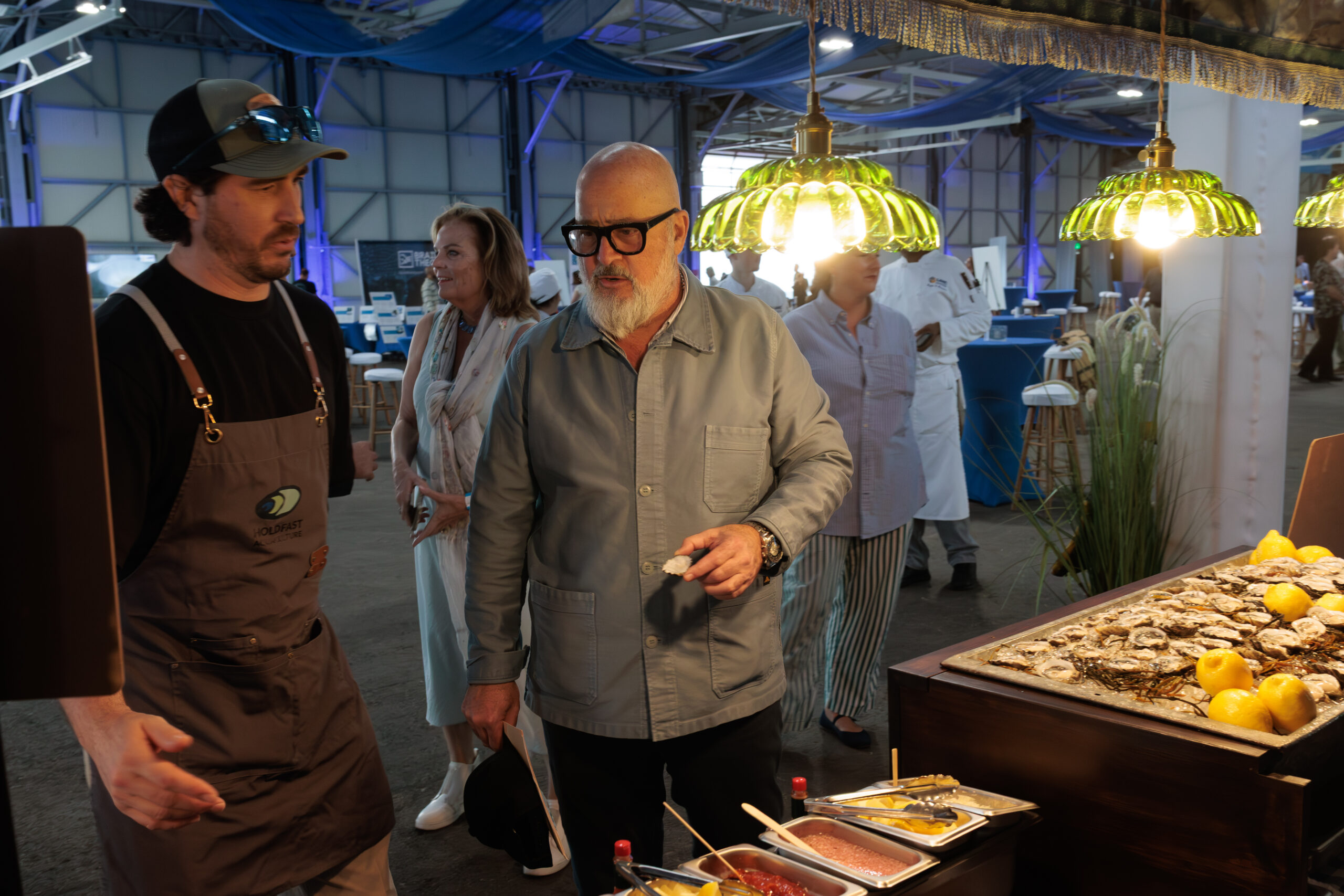
The people featured in Hope in the Water showcase the power of blue foods to positively impact food security, ocean restoration, and local economies. These economic opportunities are especially fruitful for historically marginalized populations and the frontline communities that are hit the hardest by climate change and food insecurity. That’s why sustainable aquaculture is a central focus of AltaSea. One of AltaSea’s blue foods success stories is former tenant business Holdfast Aquaculture, a team of scientists-turned-aquafarmers that has spent the past several years cultivating shellfish—one of the most sustainable and environmentally regenerative sources of protein available.
Now, Holdfast’s operations have outgrown AltaSea and expanded to a commercial scale ocean farm in Morro Bay. In a full-circle moment, Holdfast’s latest culinary venue was the blue economy hub where they got their start—the AltaSea campus. At AltaSea’s 2025 Blue Hour Gala, Holdfast’s shellfish-based cuisine was a hit amongst guests and master chefs alike.
Holdfast and other sustainable aquafarmers in the U.S. face a wide array of challenges, including complex permitting processes, lack of investment, an import heavy seafood market, and a lack of consumer awareness about diverse blue foods.
“[This lack of awareness] limits market demand for regenerative, lower-trophic species like mussels, oysters, or seaweed,” Bushman says. “Add to that competition from cheap imports, and domestic producers often struggle to scale while maintaining high sustainability standards.”
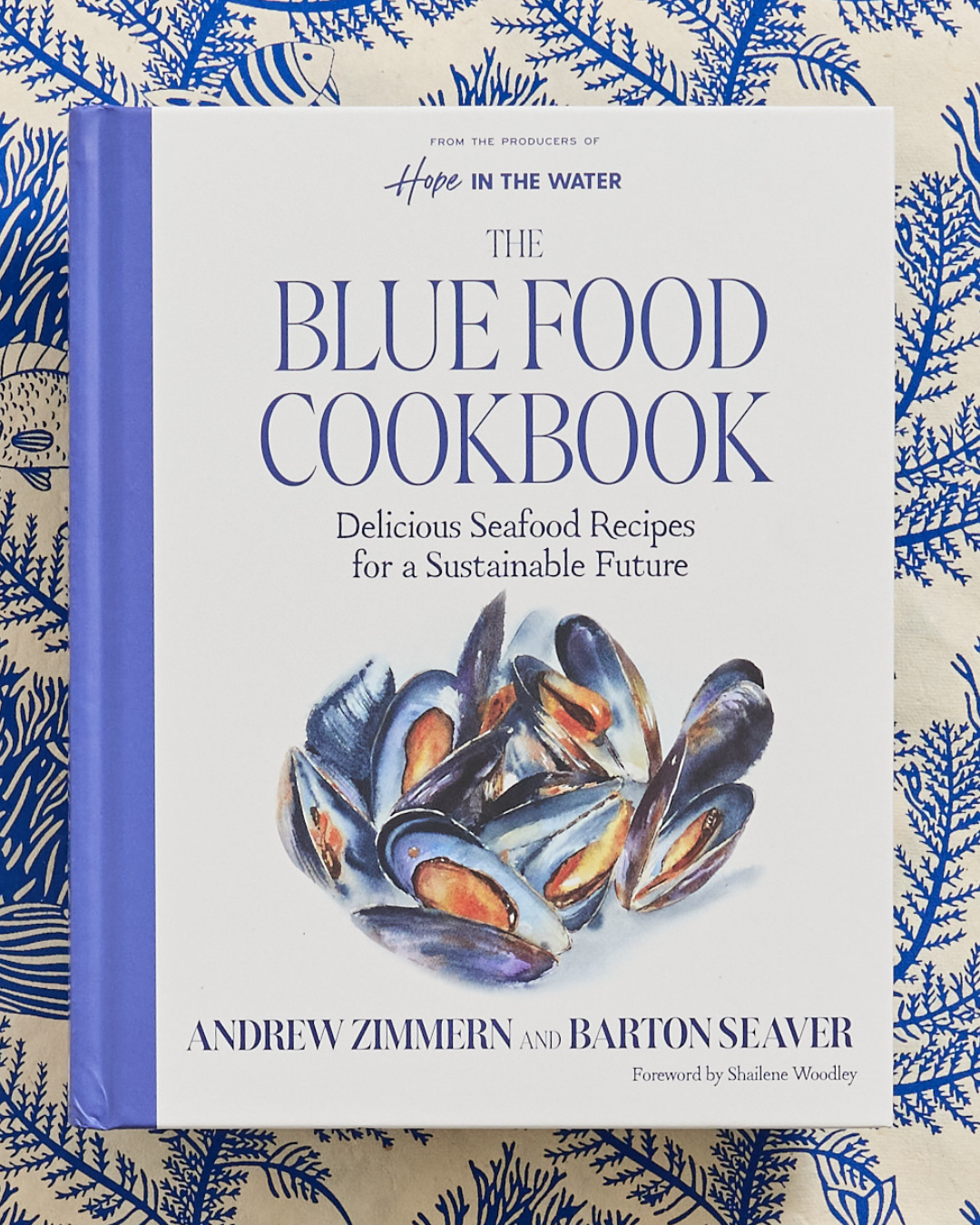
To increase people’s knowledge about blue foods, Chef Zimmern has co-wrote a cookbook—the newly published The Blue Food Cookbook: Delicious Recipes for a Sustainable Future. Created in collaboration with co-writer Barton Seaver and Bushman’s Fed by Blue, the book contains almost 150 recipes and functions as a sustainable blue foods almanac that helps readers incorporate lesser known blue foods into a wide range of delectable dishes.
Bushman’s favorite recipe from the new book is the Kelp and Berry Cobbler. “It perfectly captures what this book is all about—reimagining how we use blue foods in everyday cooking,” she says
Encouraging people, especially people in developed Western nations, to use sustainably harvested blue foods in their daily meals is necessary in order to change humanity’s relationship with the ocean for the better. In a blue foods future, humanity has stopped climate change, stabilized and restored both ocean and terrestrial ecosystems, and ensured that people worldwide are well-fed and thriving.
Such a vision may seem utopian, but the means to make it happen already exist—we just need to support and accelerate sustainable solutions at scale. This means not giving up when faced with political actors chained to retrograde ways of thinking. The current political state has proven to be hostile to the future of our planet—treating people, oceans, and climate as expendable for the sake of the profits of an elite few. These truths cannot be ignored when discussing sustainable solutions. If we want a livable future for our planet, the support of public citizens and private funders is more vital now than ever before.
“We have to invest in the people and organizations driving education, innovation, and communication,” Bushman emphasizes. “Groups like AltaSea and Fed by Blue are doing the essential work of connecting science, storytelling, and public engagement—helping communities understand how protecting and producing from our waters can go hand in hand. But we can’t do it without robust funding support.”
If the sustainable blue economy can be realized at scale, Bushman envisions, “a world where marine protected areas thrive, fisheries are well-managed, and aquaculture regenerates ecosystems, proving that when we care for the waters that feed us, they’ll continue to feed us for generations to come.”
In the spirit of accelerating a blue foods—and blue economy—future, next year’s Blue Hour, scheduled for October 10, 2026, will be centered around blue foods. Chef Zimmern will be returning to AltaSea’s cornerstone annual event as a featured chef, championing his core message—blue foods can change the world.
Written by Emily Vidovich. Emily is an environmental journalist specializing in ocean conservation and climate change mitigation. She obtained her bachelor’s degree at George Washington University and a Masters in Global Environmental Studies at a university in Tokyo, Japan. Born and raised in the Port of Los Angeles, she now works in research and communications at AltaSea.